
Interceptive Orthodontics Vélez-Málaga
Guiding growth to avoid problems in the future
Many parents wait until their children have lost all their baby teeth before visiting an orthodontist. Often, that's too late. Interceptive orthodontics is the specialty that takes advantage of a child's natural growth (between the ages of 6 and 10) to correct imbalances in the jawbones.
At Acosta Cubero Dental Clinic, we detect and treat these skeletal abnormalities early, avoiding complex treatments, extractions or surgeries in adulthood.
The window of opportunity
Why treat at 6 or 7 years old?
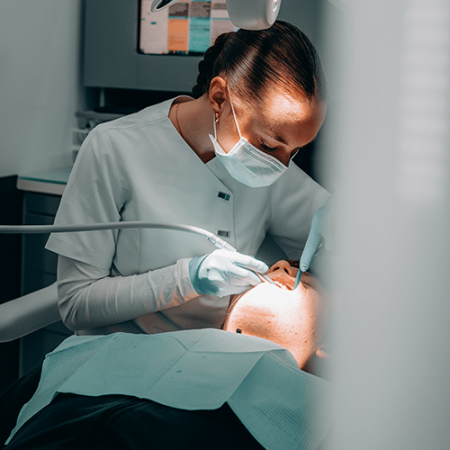
There is a "golden age" in childhood development when the facial bones are malleable, like modeling clay. During this stage (mixed dentition), we can influence the size and position of the bones with simple appliances.
The goal is not to align the teeth (that is done later), but to create the correct space and bone structure so that, when the permanent teeth come in, they have room and fit perfectly.
Understanding Your Nail Polish
What do the child and the parents gain from this?
Correcting bone problems in childhood has a direct impact on your child's overall quality of life. By intervening during growth, we not only avoid aggressive treatments in the future, but we also improve immediate vital functions such as nasal breathing.
Red Flags
When does my child need interceptive orthodontics?
Sometimes the symptoms aren't painful, but they are noticeable if you pay attention. If you observe any of these situations in your child between the ages of 6 and 9, we recommend requesting an immediate evaluation at our clinic.
Crossbite (The Narrow Palate)
This is problem number one. The upper jaw is narrower than the lower jaw, so the upper teeth bite “inside” the lower teeth. If the palate isn’t expanded now, facial growth will be irreversibly distorted.
Protrusion ("Rabbit Teeth")
The upper teeth protrude at a steep angle. Beyond aesthetics, these teeth are at a very high risk of breaking from any fall during recess or while playing sports, as they are not protected by the lip.
Class III (Prominent jaw)
When the lower jaw grows faster than the upper jaw (the child appears to have a protruding chin), it is one of the most difficult problems to treat if left until adulthood, often requiring surgery. In childhood, this growth can be slowed with face masks or functional appliances.
Open Bite (By Pacifier/Finger)
When the mouth is closed, the front teeth don’t touch. This is usually caused by prolonged pacifier use or thumb sucking. We need appliances that will break this habit and help close the bite so the child can eat properly.
Premature loss of baby teeth
If a baby tooth falls out prematurely (due to decay or injury), the adjacent teeth tend to shift and close the gap, trapping the permanent tooth underneath. We use “space maintainers” to prevent this blockage.
Busting myths
Truths About Orthodontics
Existe la creencia popular de que "hasta que no se caen todos los dientes de leche, no se pone aparato". Este mito es el causante de muchas cirugías en adultos que podrían haberse evitado. Queremos que tomes la decisión con información médica real, no con consejos antiguos.
Is it better to wait?
Absolutely not. Waiting until age 12 means that the bone has already hardened and the sutures in the roof of the mouth have closed.
Will it hurt to be so small?
On the contrary. The bone of a 7-year-old child is much fluffier and more malleable than that of a teenager.
Will your teeth be chipped?
Unlike fixed braces that trap a lot of food, most interceptive appliances are removable or have very hygienic designs.
Vélez-Málaga
Bone before Tooth
It's vital to understand that interceptive orthodontics works on the structure, not on immediate aesthetics. We use appliances (which can be fixed, like palatal expanders, or removable, like plates or aligners) to widen the palate, slow jaw growth, or stimulate it. We're preparing the ground. If the "garage" (the bone) is small, the "car" (the tooth) won't fit, no matter how hard we push it afterward.
Frequently Asked Questions Interceptive Orthodontics
Parents' doubts about the "First Phase"
Orthodontic treatment for young children raises many questions about its suitability and duration. Here we answer the most frequently asked questions from parents in Vélez-Málaga.
At what age should I bring my child for the first time?
The Spanish Society of Orthodontics recommends the first check-up at age 6. At this age, the first permanent molars erupt, and we can see how the jawbones are aligning, even if the child still has baby teeth.
Is it painful for the child?
No. Interceptive appliances apply gentle forces. Because they are growing bones, they respond very quickly and painlessly. You may notice slight pressure or discomfort when speaking for the first few days, but they adapt incredibly fast.
How long does the treatment last?
These treatments are usually short, lasting between 6 and 12 months. The goal is to correct the bone structure, not to make the teeth perfect yet. Once the structure is corrected, we let the child rest until all their permanent teeth come in.
Will you need braces afterwards (Phase 2)?
It’s very likely, yes, to align and rotate the permanent teeth when they all erupt (around age 12). But thanks to having completed Phase 1 (interceptive), that second phase will be much shorter, simpler, and won’t require extractions.
Comprehensive Excellence
From invisible orthodontics to complex surgery or microscopic endodontics, specialists in caring for your health in Vélez-Málaga.
Ethics and humane treatment
Tratamos personas. Te garantizamos diagnósticos honestos, explicaciones claras y un plan de tratamiento diseñado para ti.
Precision technology
Diagnósticos digitales con escáner 3D, microscopios de alta gama y TAC dental para intervenciones más seguras, rápidas y predecibles.
Write to us
Book your appointment
Leave us your details and tell us the reason for your inquiry. We will contact you as soon as possible to confirm your appointment at a time that suits you best.
Data controller: Acosta Cubero Clinic
Purpose of processing: Respond to your query, request for quotation and/or suggestions.
Legal basis: Consent of the interested party to respond to their query, request and/or suggestion for information.
Recipients: Your data will not be communicated to third parties. No international data transfers will take place.
Rights: You have the right to access, rectify and delete your data, as well as other rights, as explained in the additional information.
Additional information: You can find additional and detailed information about data protection in our Privacy Policy.
