

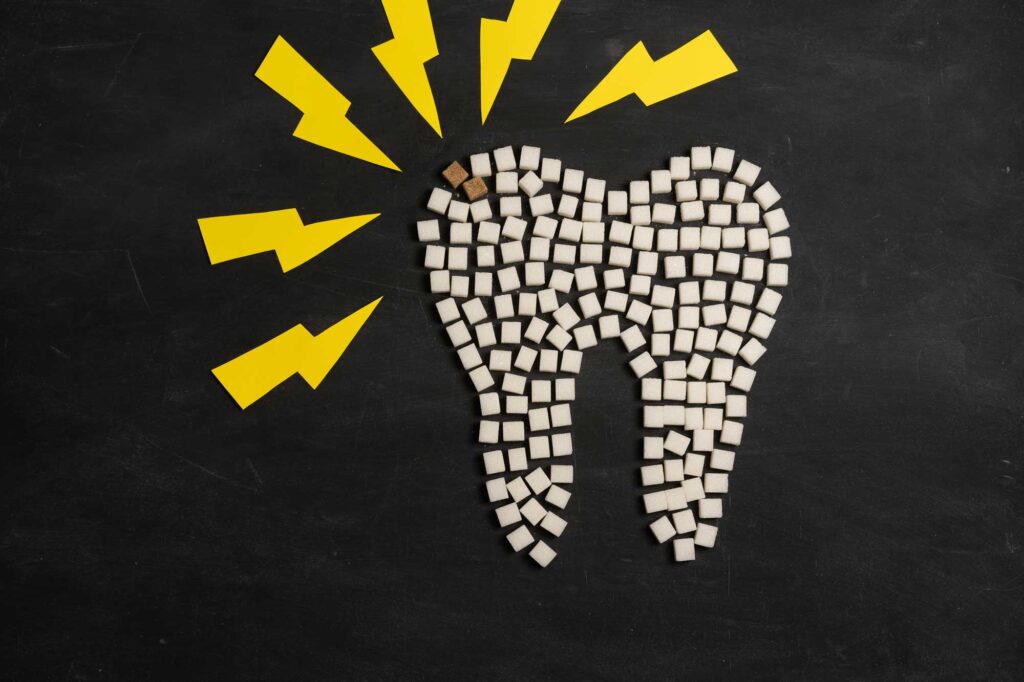
Toothache is a constant pain whose intensity keeps building. It’s probably one of the strongest and most intense types of pain you can experience, and hot food, cold drinks or chewing can make it worse.
If you have toothache, the best thing to do is see your dentist as soon as possible so they can find the cause and recommend the most suitable treatment for your case.
Depending on the cause, the dentist will recommend one treatment or another. Sometimes the cause lies directly in the tooth, while at other times the pain may come from other sources that the dentist needs to identify.
Most of the time, people wait a long time before going to the dentist, so a root canal treatment is often needed to save the tooth.
On other occasions, the pain may be caused by a variety of factors, so the dentist will need to examine your mouth and take an X-ray to see what is causing the pain and which treatment should be applied.
Causes of toothache
Common toothache is mainly caused by pulpitis, which is inflammation of the dental pulp.
This pain is due to the dental nerve being affected, and the most common reason is very advanced tooth decay.
Decay allows bacteria to get inside the tooth until they reach the nerve, where the bacterial infection develops.
Pulpitis can also be caused by trauma or by other factors such as tooth wear or endodontic-periodontal lesions, although these are not very common.
When the pulp becomes inflamed, pressure builds on the dental nerve and the surrounding tissues. Because it is surrounded by dentine, the pulp chamber cannot release this pressure, and the increased blood flow caused by the inflammation results in pain.
Sometimes the pain is so intense that it’s hard to tell which tooth is causing it.
The most common causes of pain are:
- Tooth decay
- A crack, trauma or fracture in the tooth
- Gum disease (periodontitis, gingivitis)
- Dental abscess or periodontal abscess
- Jaw joint disorders
Symptoms
Toothache is felt in the face area and most often appears because of a problem with the teeth. It can show up as a constant pain in the jaw, head and ear. The pain usually comes from irritation of the dental nerve caused by an infection.
The main symptoms of toothache are:
- Sensitivity to cold and/or hot food
- Pain when chewing
- Bleeding around the gum or tooth
- Swelling of the affected area and the jaw
How can you relieve the pain?
Depending on the cause, the pain can be eased with painkillers. Even so, when there is an infection, painkillers work for shorter and shorter periods and antibiotics end up being needed.
For infections, the antibiotic usually prescribed is amoxicillin. For people who are allergic to penicillin, erythromycin (Pantomicina) or clindamycin is used.
With this in mind, it’s important not to self-medicate. You should see your dentist to find out which medication is right for relieving your toothache in your particular case (in the meantime, you can read our tips on what to do if you have toothache).
Toothache treatment
The treatment will depend on the problem affecting the tooth. For example, if the tooth has decay, the damaged tissue needs to be removed and a composite filling placed.
If the decay has damaged the nerve, a root canal treatment would be needed, after which the tooth would be restored with an inlay or a dental crown. And if the tooth cannot be saved, it would have to be removed by extraction.
It’s very important to treat infections as soon as possible: not only do they cause very intense pain, but the infection can also spread if it isn’t treated in time.
Prevention
Prevention is always the best treatment, so good oral hygiene is very important. To avoid pain, you should also visit the dentist regularly.
By seeing your dentist regularly, decay and other conditions can be diagnosed early, before they cause pain.
Your dentist can get ahead with the diagnosis before any pain appears, preventing infections and stopping any dental disease in time, quickly and effectively. If you already have toothache, book your appointment and we’ll take a look.
