

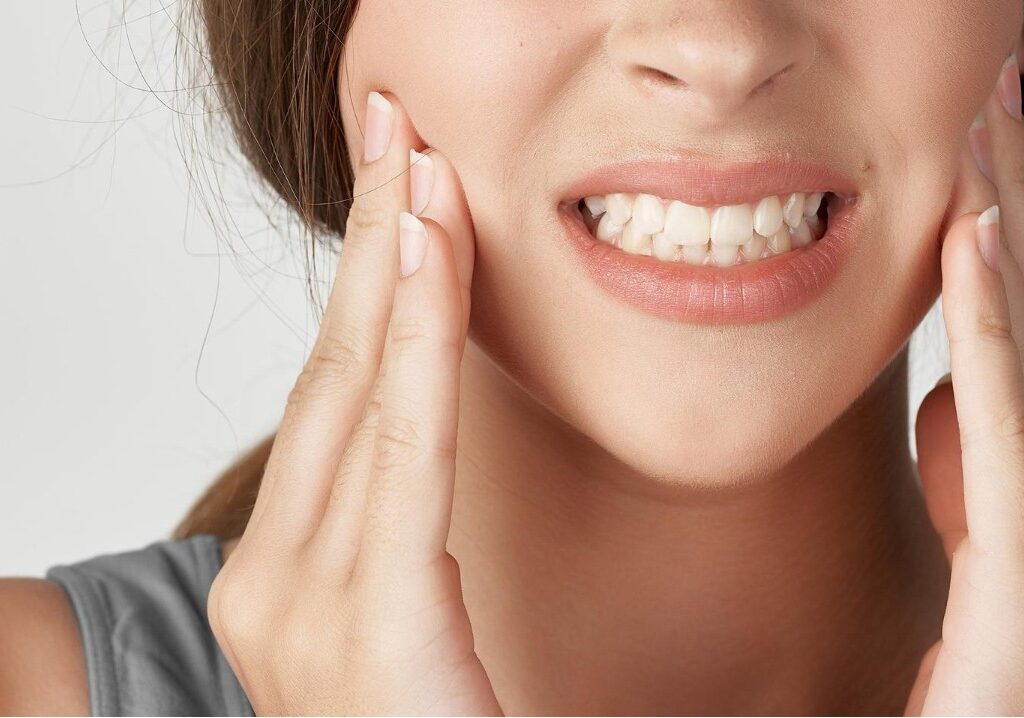
The alarm goes off in Vélez-Málaga. You open your eyes and, instead of feeling rested, you notice jaw pain when waking up, pressure in your temples, a stiff neck or tired facial muscles, as if you had been chewing gum all night. That morning pain is one of the clearest signs that you may be clenching your teeth while you sleep: it could be bruxism.
Sound familiar? You’re not alone. Today’s pace of life and stress have sent cases of bruxism soaring: the involuntary habit of clenching or grinding your teeth, usually while you sleep (our guide covers the causes and treatment of bruxism).
The problem is that, because it happens unconsciously, many patients at Acosta Cubero Dental Clinic don’t know they have it until the damage is already visible. Today we focus on the symptoms: what that morning pain means, which other signs come with it and what to do when it appears. 👇
1. Why does your jaw hurt when you wake up? 🦷💥
At night, bruxism works as a parafunction (a movement with no useful purpose) in which the chewing muscles contract with excessive force, pressing the upper teeth against the lower ones. Those muscles work for hours without rest and, in the morning, you feel it as a loaded jaw, a headache in your temples or a stiff neck.
- Sheer force: to give you an idea, when you chew you apply around 20-30 kg of force. When you grind at night, you can exert more than 100 kg of pressure! Your teeth aren’t designed to withstand that constant load night after night.
2. Warning signs: take a look in the mirror 🪞
If you suspect you clench your teeth, look out for these details:
- Morning headaches: if your headaches mostly appear when you get up and are centred on your temples, the cause may be the tension built up in your jaw muscles overnight.
- “Flat” teeth: canines should end in a point and incisors should have well-defined edges. If your teeth look straight across, as if they had been filed down, it’s a clear sign of wear caused by bruxism.
- Cracks and fractures: sometimes the enamel can’t take the pressure and cracks, or small pieces of molars or fillings chip off for no apparent reason.
- Tooth sensitivity: as the enamel wears away, the dentine is exposed and you feel sharp twinges with cold or heat (we explain more in our guide to tooth sensitivity to cold).
- Clicking when you open your mouth: does your jaw click when you yawn or eat? It’s a sign that the joint (TMJ) is under strain.
3. What to do if you wake up with jaw pain 🛡️
If the pain comes back several mornings in a row, don’t brush it off. These steps help you put a stop to it:
- Watch yourself during the day: check whether you clench your teeth when you are concentrating or tense; at rest, your teeth should not touch.
- Give your jaw a rest: avoid chewing gum and very hard foods while the discomfort lasts.
- Book a check-up: your dentist can confirm whether there is wear or muscle overload and rule out other causes of the pain.
The usual protection is a custom-made occlusal splint (night guard) worn while you sleep; we explain in detail what an occlusal splint is, its types and how to care for it.
4. Extra relief: orofacial harmonisation 💉
As specialists in orofacial harmonisation, in very severe cases of bruxism where the masseter muscle (the one in your cheek) is very enlarged and strong, we can apply specific relaxing treatments to reduce that muscle’s power. This not only relieves tension but also slims the face (which often looks “wide” in people who grind their teeth).
Protect your smile in Vélez-Málaga 📍
Tooth enamel doesn’t grow back. Whatever you wear away is lost for good. Don’t let stress eat away at your smile.
If you wake up in pain or notice your teeth changing shape, come and see us at Acosta Cubero Dental Clinic, where we see patients from Vélez-Málaga, Torre del Mar and the whole Axarquía. We will assess your case and explain the bruxism treatment with a night guard that suits you best. Book your appointment so your teeth stay safe and you get the rest you deserve.
Sleeping well and smiling better is possible! 😴✨
