

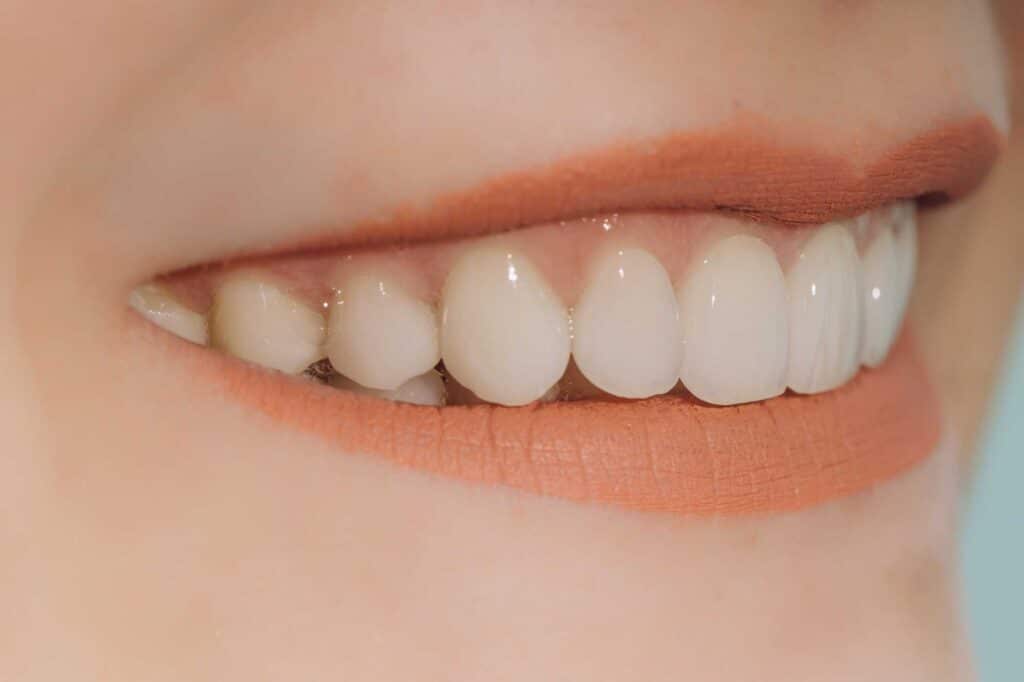

Both the bone structure and the teeth are the foundation of the mouth and the tissues around it. If they are not properly aligned, there is a malocclusion or incorrect bite, and depending on how the teeth fit together we talk about different types of bite. On the outside, a poor bite causes fairly significant aesthetic problems, and on the inside its effects on oral health are even wider-ranging.
Some of the problems an incorrect bite can cause include digestive disorders, headaches or impaired hearing, which affect the person’s general health and even the way they interact with others.
There are many types of bite and, thanks to advances in dentistry, many ways of treating them. These are the main ones and their treatments:
Overbite
This is one of the problems that most affects the appearance of the face. The upper front teeth almost completely cover the lower front teeth. In addition, the edges of the lower teeth may touch the gum on the roof of the mouth.
The treatment used for an overbite is orthodontics which, depending on the severity, may be combined with orthognathic surgery. The main aim of treatment is to move the front teeth back and bring the back teeth forward.
The results will depend on the person’s facial features, their growth potential (which is why it is so useful to take children to the orthodontist at age 6) and how deep the bite is.
Pros
- It is the best option for correcting it.
- It provides a longer-lasting solution.
- It helps to heal or prevent damage to the temporomandibular joint (TMJ).
- If treated early, it prevents further deterioration.
Cons
- It is a lengthy treatment: it lasts from 6 to 24 months.
- A retainer has to be worn for life.
Closed bite
As we age, our teeth naturally wear down, which can eventually lead to a closed bite. This can also be quite a serious problem.
If the teeth at the back of the mouth become very worn, the lower part of the face can partly collapse, making the person look older and giving them a toothless appearance.
The most suitable treatment for this problem is dental crowns, although veneers and dental bonding can also work.
These procedures lengthen the front teeth, but before any restorative treatment it is important for the person to undergo orthodontics. Once the jaw has been repositioned, orthognathic surgery is carried out.
Pros
- A good option for correcting a closed bite.
- In some cases, crowns on the back teeth improve both the bite and the appearance of the face, as they leave more room for the front teeth.
Cons
- Opening the bite may prove complicated.
- The teeth have to be reshaped and the crowns replaced every 5 to 15 years.
Crossbite
In a crossbite, the lower teeth sit in front of or outside the upper teeth. This problem can affect both the front and the back teeth. When it affects the front teeth, this type of bite makes the chin stick out.
The most suitable treatment for correcting a crossbite is orthodontics, although if it is very severe, complementary orthognathic surgery may be needed.
Pros
- It is the most effective of all the available options.
- It offers the longest-lasting solution.
Cons
- Correcting the bite takes a long time.
Open bite
This type of bite occurs when the upper and lower teeth do not meet at the front, even though the back teeth are in contact. It can be caused by hereditary factors and also by various habits, such as chewing pencils or pushing with the tongue.
People with an open bite are often unaware they have the problem, but one of the symptoms is difficulty biting with the front teeth. It can also make the upper lip protrude, making it hard to close the lips without straining.
The treatment of choice for correcting this type of bite is also orthodontics, although in some cases it can be combined with orthognathic surgery.
Pros
- It improves chewing.
- It improves the position of the lips and facial aesthetics.
- When combined with surgery, treatment time is shorter and facial results are better.
Cons
- It takes a long time.
- Depending on the severity and the person’s habits, retention can be a problem.
- A retainer usually has to be worn for life.
Protrusion
Protruding front teeth can spoil a perfect smile. This is also known as “buck teeth” and, in the most severe cases, it can cause facial deformities and prevent the lips from closing.
As in the other cases, the most suitable treatment is orthodontics, combined with orthognathic surgery in the most severe cases.
Pros
- It is the most effective treatment.
- Its results last the longest.
- It can be combined with surgery to shorten treatment time.
Cons
- Treatment lasts from 6 to 24 months.
- Depending on the severity and the person’s habits, retention can be a problem.
- A retainer usually has to be worn for life.
Types of bite: which treatment do you need?
As you have seen, for almost every type of bite the treatment of choice is orthodontics, on its own or combined with other treatments. To find out which option suits you best, from conventional orthodontics with braces to clear aligners, it will help to read about the differences between braces and Invisalign. And if you feel your bite does not fit together properly, book your first visit and we will assess your case.
