

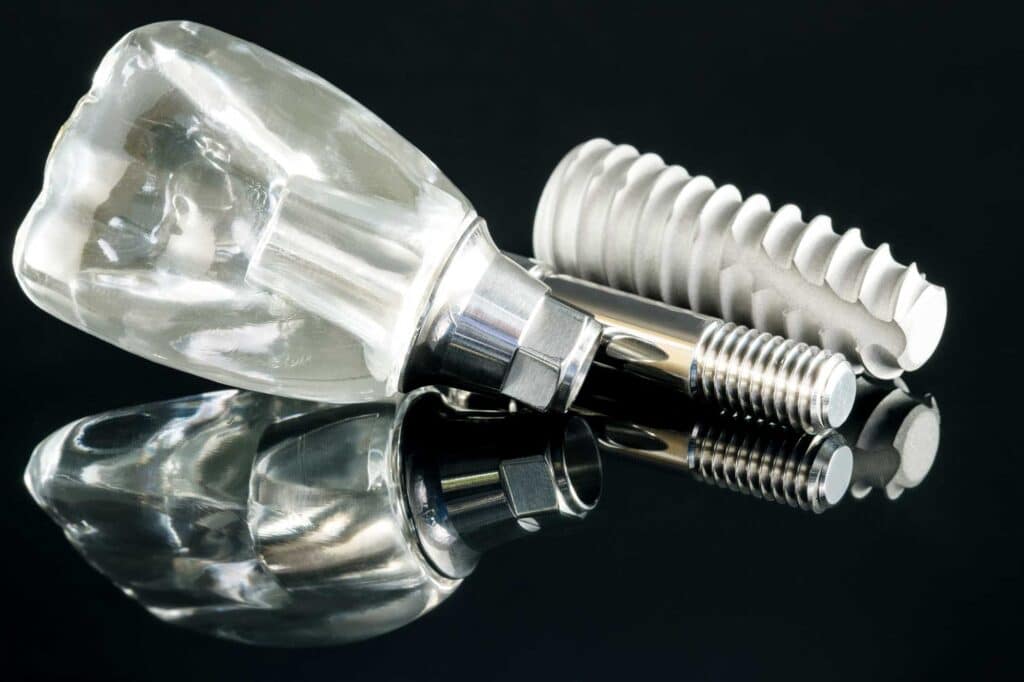
Several conditions can lead to tooth loss, such as periodontitis, tooth decay or bruxism. With missing teeth, eating can become more difficult. The solution is to place dental implants.
What are dental implants?
They are the ideal solution for anyone who has lost a tooth. A titanium screw is placed inside the maxillary bone, if it is in the upper part of the mouth, or inside the mandibular bone, if it is in the lower part. The size of the implant depends on the gap left after the tooth was lost. Once the screw is in place, an artificial tooth is fitted on top.
Before placing a dental implant, the dentist needs to check the condition of the gum with an X-ray and, once it has been confirmed that there is enough bone, the implant is placed.
Types of dental implants
Depending on how the implant is placed, there are two types:
Immediate-load dental implant: with this type of implant there is no need to open the gum. The implant is placed and the crown is attached straight away. This requires a good amount of bone. It is a less common type of implant because the area must be completely free of infection.
Two-stage dental implant: the first stage is used to place the implant and allow it to integrate with the bone. The second stage takes place 3 to 6 months later, depending on the area, when the abutment and the crown are fitted.
Pain with dental implants
When it comes to getting a dental implant, one of the most common fears is the pain you might feel after the operation, or whether the sensation in your mouth will change. In reality, the protocol for placing dental implants is designed so that the patient does not feel any pain.
This surgical procedure is carried out in the dental surgery itself. The first step is to apply local anaesthetic to the area being treated, so the patient will not feel any pain, just the first prick of the anaesthetic.
Once the anaesthetic wears off, the patient will only feel mild discomfort. How much depends on the number of dental implants and the area of the mouth where they are placed.
Problems with dental implants
Placing implants may seem straightforward, but some complications can occur, which can be divided into those that appear during the operation and those that arise afterwards.
Right after the procedure, you may experience pain, swelling, bleeding and bruising. There can also be mechanical complications, such as the dental prosthesis or the screw breaking. If this happens, you need to speak to your dentist so they can advise you on what to do.
It can also happen that the dental implant does not fully integrate with the bone. This is due to certain factors such as diabetes, the quantity and/or quality of the bone, medication and smoking. The implant may move during the early stages of treatment. In the medium and long term, peri-implantitis may develop. And even with all the necessary check-ups, the implant may not integrate properly because of poor oral hygiene or certain biological factors in the patient.
Caring for dental implants
If you follow your dentist’s instructions properly, there is no reason for complications after the operation. You will need to wait a few months before the final prosthesis is fitted on the implant, regardless of the healing time and the removal of any stitches.
After the procedure, these are the essential steps to look after your implants:
- Place a dry gauze on the area while the wound is still bleeding, pressing for about 20 minutes. If it keeps bleeding, use another clean gauze and repeat.
- Do not eat until the anaesthetic has worn off, which takes 4 to 6 hours after the procedure. A soft diet with food at room temperature is recommended for the first few days.
- The area where the implant is placed swells from the moment of the procedure. To reduce discomfort, you can apply something cold to the outside of your mouth and take painkillers or anti-inflammatories, as directed by the dentist who carried out the procedure.
- Avoid both tobacco and alcohol, as they are two of the risk factors that can make the treatment fail.
- Oral hygiene must be thorough and very strict, using an ultra-soft surgical toothbrush. From the following day you can rinse gently with warm salt water or a chlorhexidine mouthwash, but always as recommended by your dentist.
- When sleeping, keep your head slightly higher than the rest of your body.
- Avoid physical exertion during the week after the procedure.
If you are thinking about getting dental implants or have questions about your case, book your appointment and we will assess it with you.
